When the clouds rolled in and rain threatened to take the sun out of our Sunshine Coast day, we headed indoors to SEA LIFE Sunshine Coast Aquarium. We’ve been fortunate to visit many aquariums as a family so we are always looking for an attraction that offers something different. SEA LIFE Sunshine Coast Aquarium delivered with good accessibility and unique experiences.
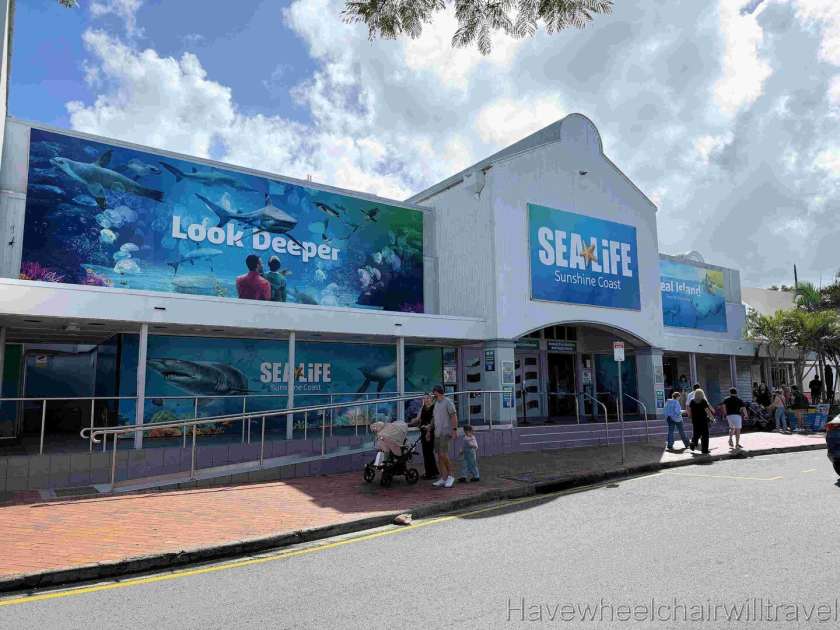
SEA LIFE Sunshine Coast Aquarium review
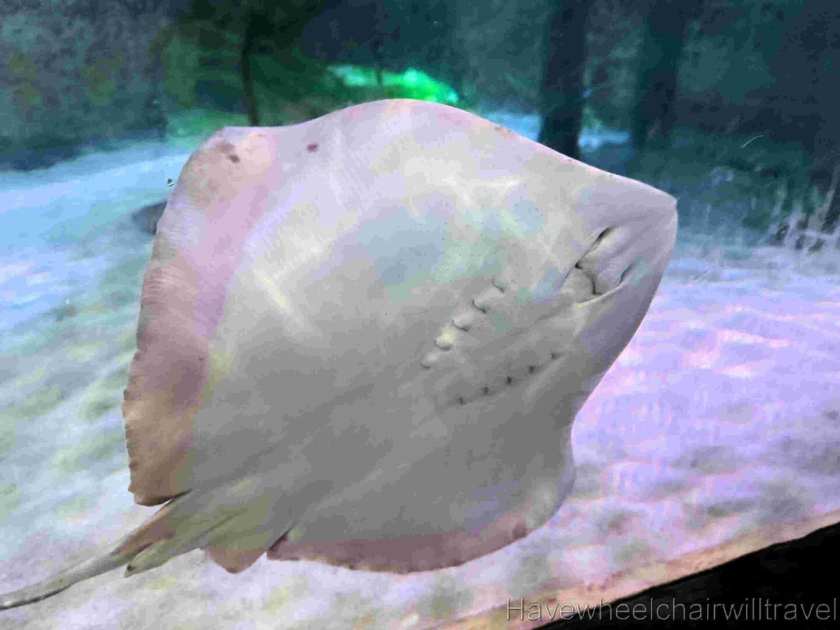
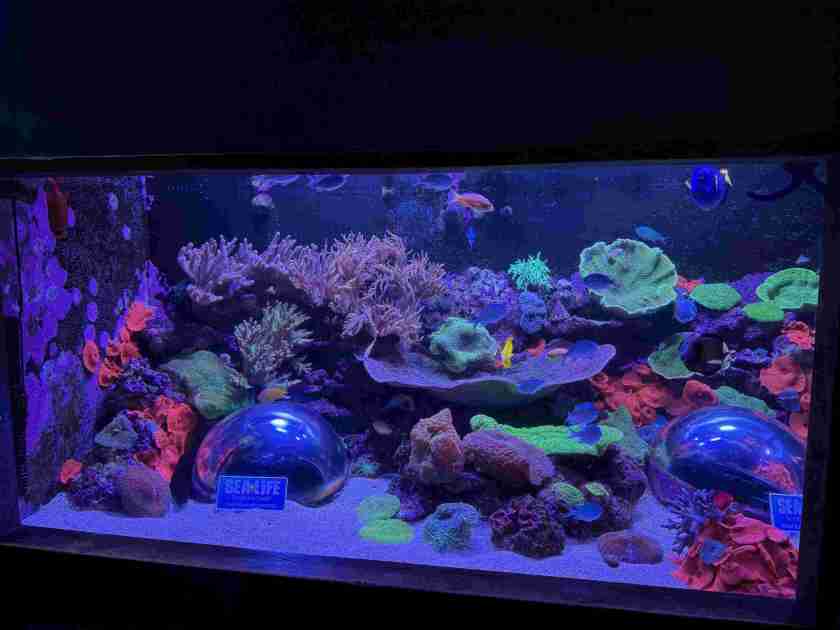
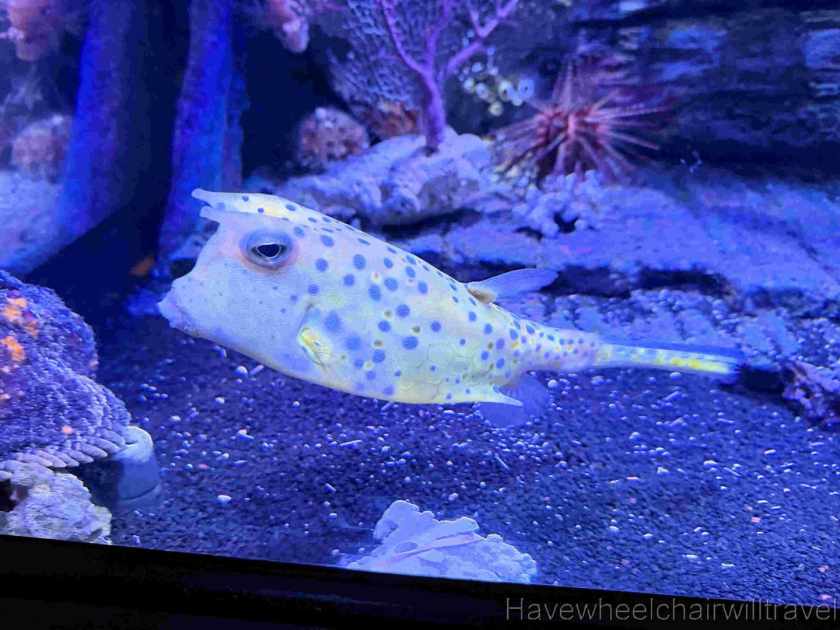
SEA LIFE Sunshine Coast Aquarium has some similarities to other SEA LIFE aquariums including fabulous 80 meter long ocean tunnels where sharks, rays and reef fish are up close and easy to admire.
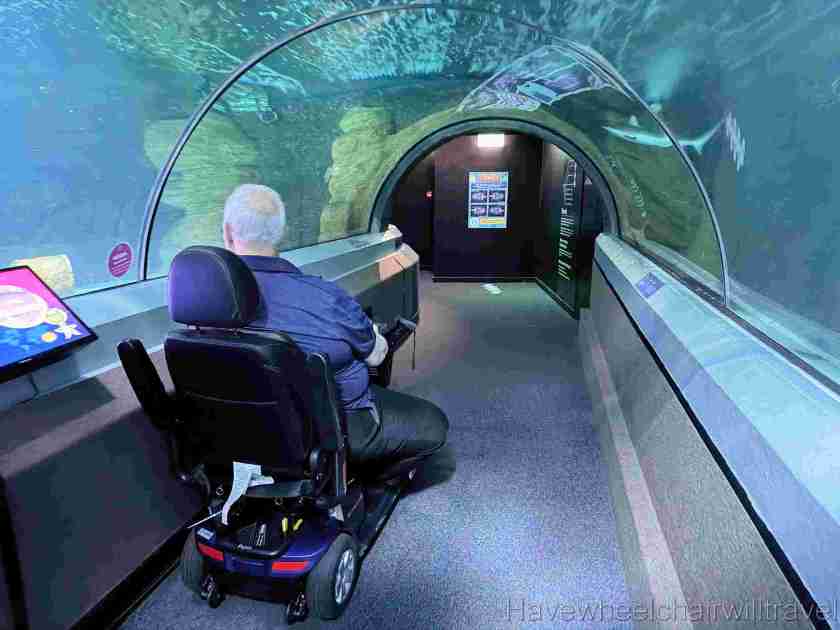
The displays are located at a good height for everyone from tiny tots to those using mobility equipment.
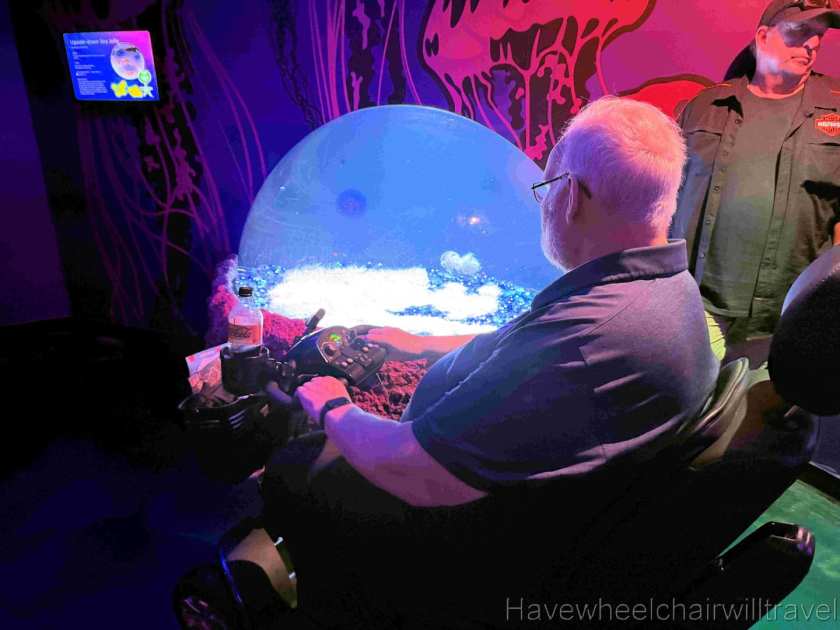
Some areas of the aquarium are narrow and become congested with visitors eager to check out the displays. Our visit was on a Sunday of the long weekend which probably meant we saw it at its peak.
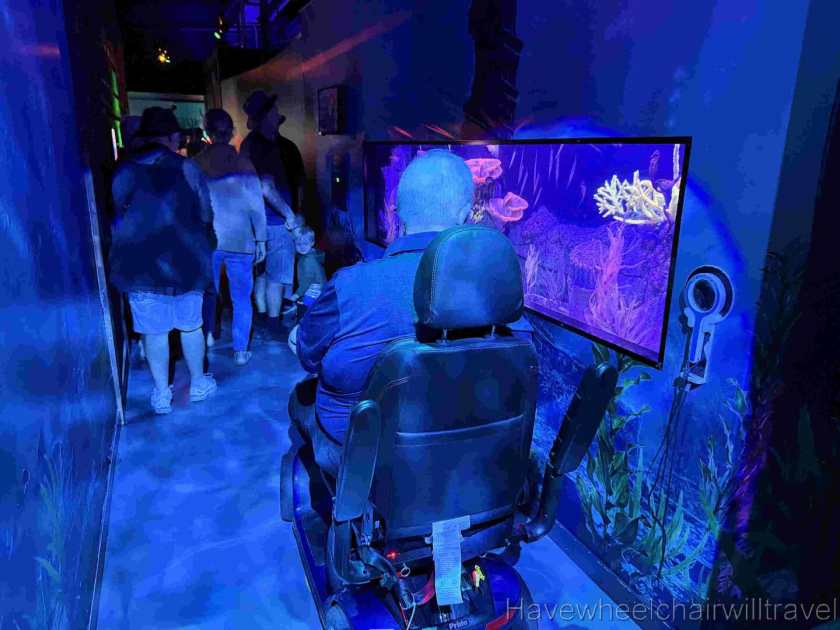
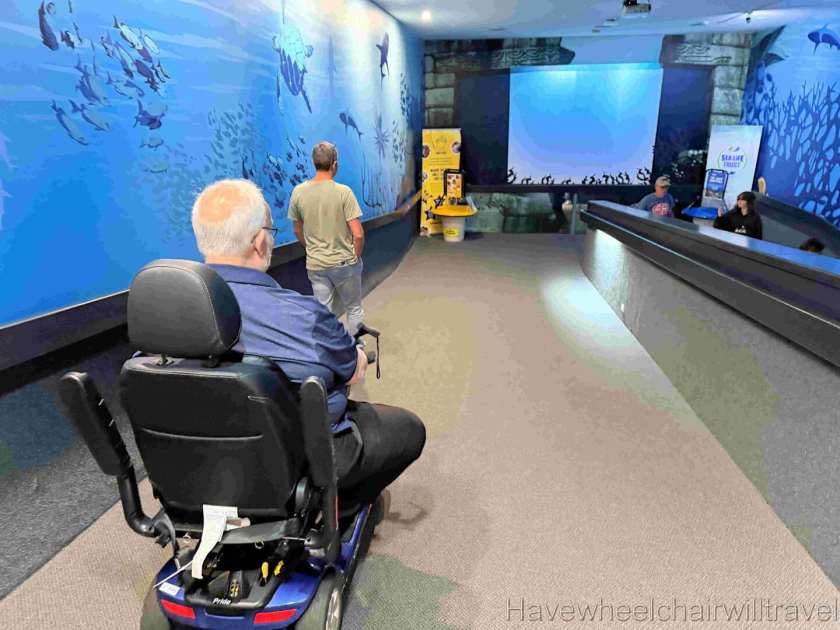
Wide ramps link the various levels of SEA LIFE Aquarium making it easy to move between the various zones.
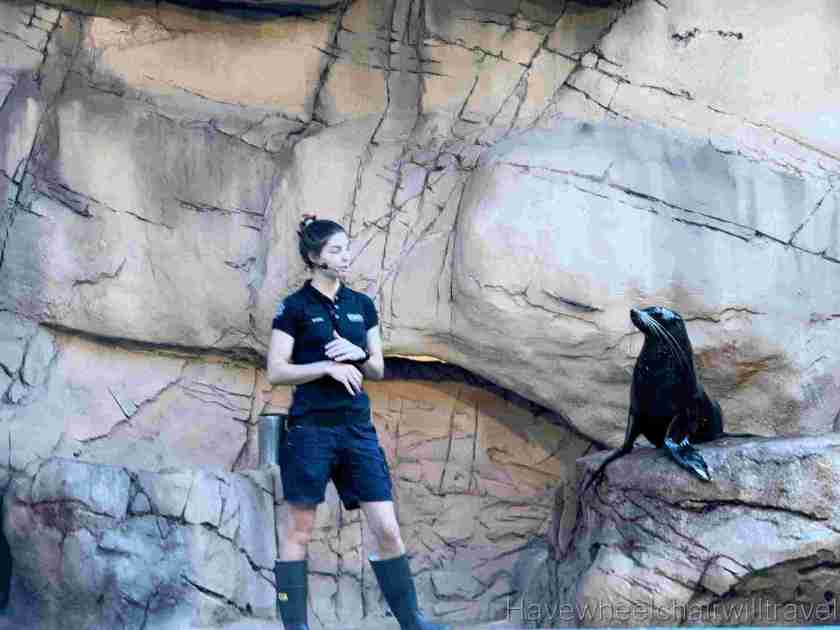
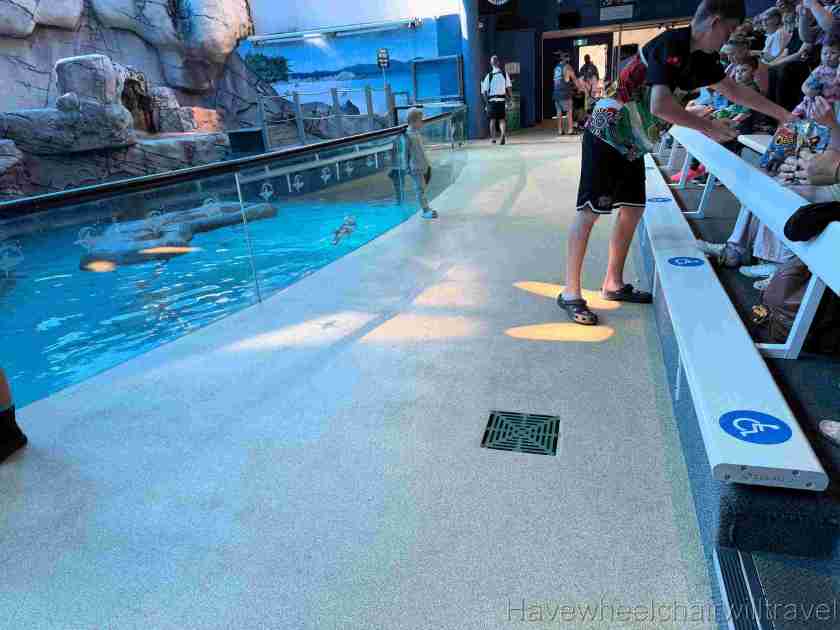
A seal show occurs three times a day with Moana, a rescued seal who is blind, happily educating visitors on long nose fur seals. Sly, a 130kg male, is also on hand to remind the audience that putting rubbish in the bin will help keep the ocean clean and give seals a better chance of survival.
Accessible seating is available in the front row but wheelchairs do need to sit in front of the bench seating.
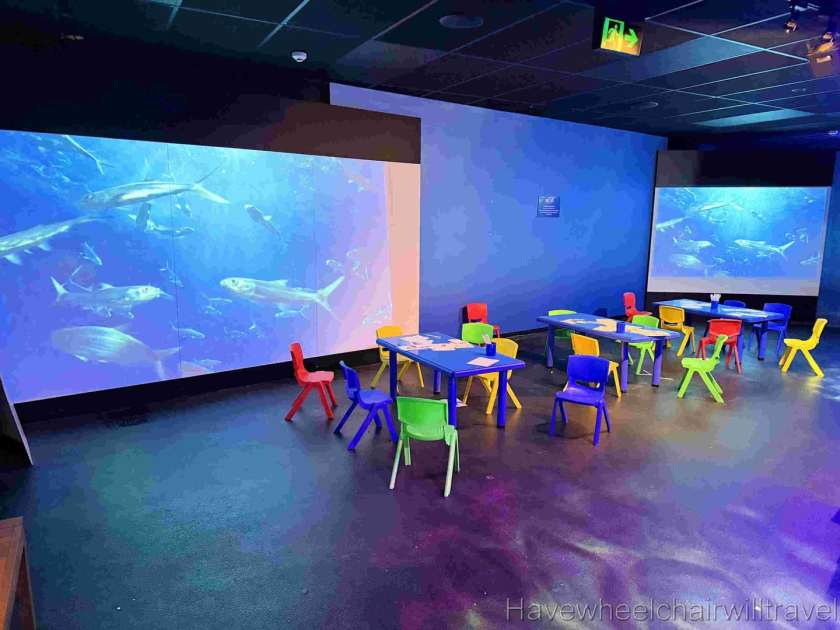
On a weekend SEA LIFE is busy so it’s lovely to see a quiet area for anyone that needs a little time out. Although not identified as a quiet zone, on the weekend it certainly provided a calm corner.
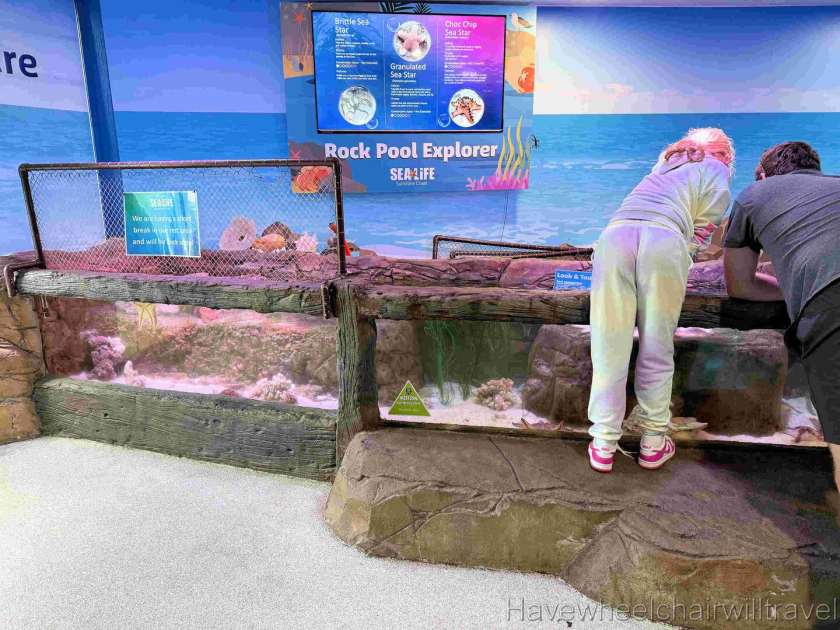
The majority of the aquarium is accessible but a step around the tidal pools does prove a barrier to anyone using a mobility aid being able to access the pools.
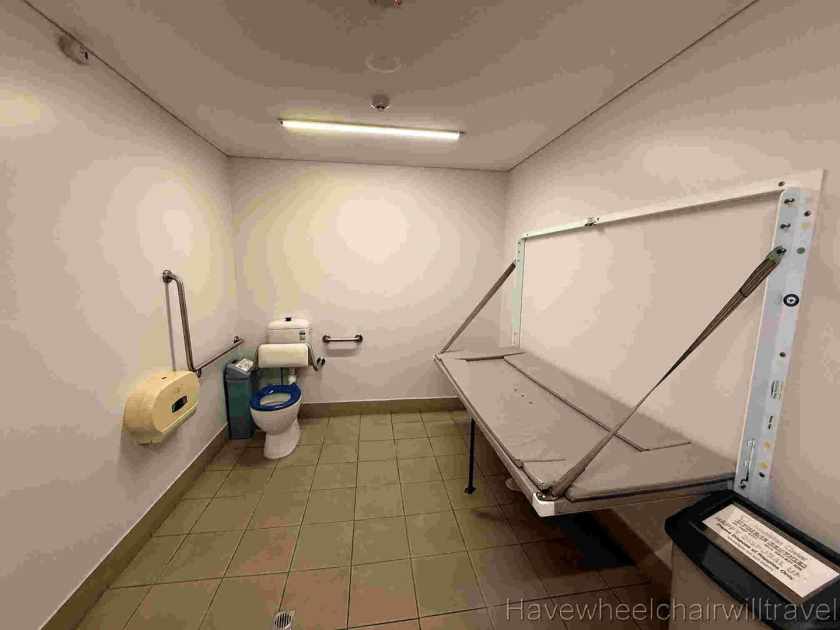
There is one unisex accessible bathroom which is close to the start of the route throughout the aquarium. It offers a change bed but it should be noted it isn’t height adjustable and there is no hoist.
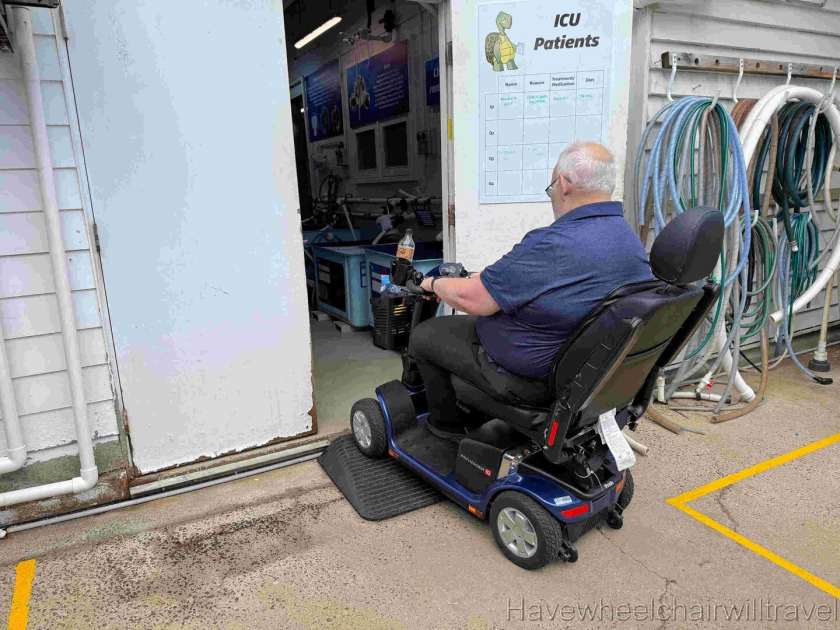
We took part in a tour of the turtle hospital (additional cost to the entry price) and it was the highlight for one of my travel companions. No photos are allowed in the hospital because it would appear that even turtles want to be looking and feeling their best when appearing in happy snaps.
What you’ll see in the turtle hospital will depend on who is being rehabilitated at the time. During our visit we heard about Wyuna, a green sea turtle that was found washed up on the beach with barnacle growth. The barnacles can cause infection and paralysis. The turtles are put in fresh water for 48 hours to rehydrate them and to deal with the barnacles.
Another turtle in the hospital was suffering from floating syndrome (gas caught) which, when it occurs, prevents the turtles diving down in the water to feed. It also leaves them vulnerable to boat strike. Turtles rescued with floating syndrome are treated by soaking their food in paraffin oil which helps the gas pass through.
Belinda, our guide, also told us that for turtles, squid is as desirable as chocolate is to humans.
My travel companion in a large scooter was able to navigate around the turtle hospital but it should be noted that entry is via a back door for anyone with a mobility restriction as the tour entrance is usually via stairs.
SEA LIFE Sunshine Coast Aquarium periodically offers sensory mornings with the aquarium opening early for those seeking a low sensory visit. These events are advertised via the aquarium’s Facebook page.
I was hosted for my visit to SEA LIFE Sunshine Coast Aquarium but as always my opinions are my own. I thoroughly enjoyed my time checking out the variety of sea life at the aquarium and loved the visit to the turtle hospital to see the important rehabilitation work the team are involved with.